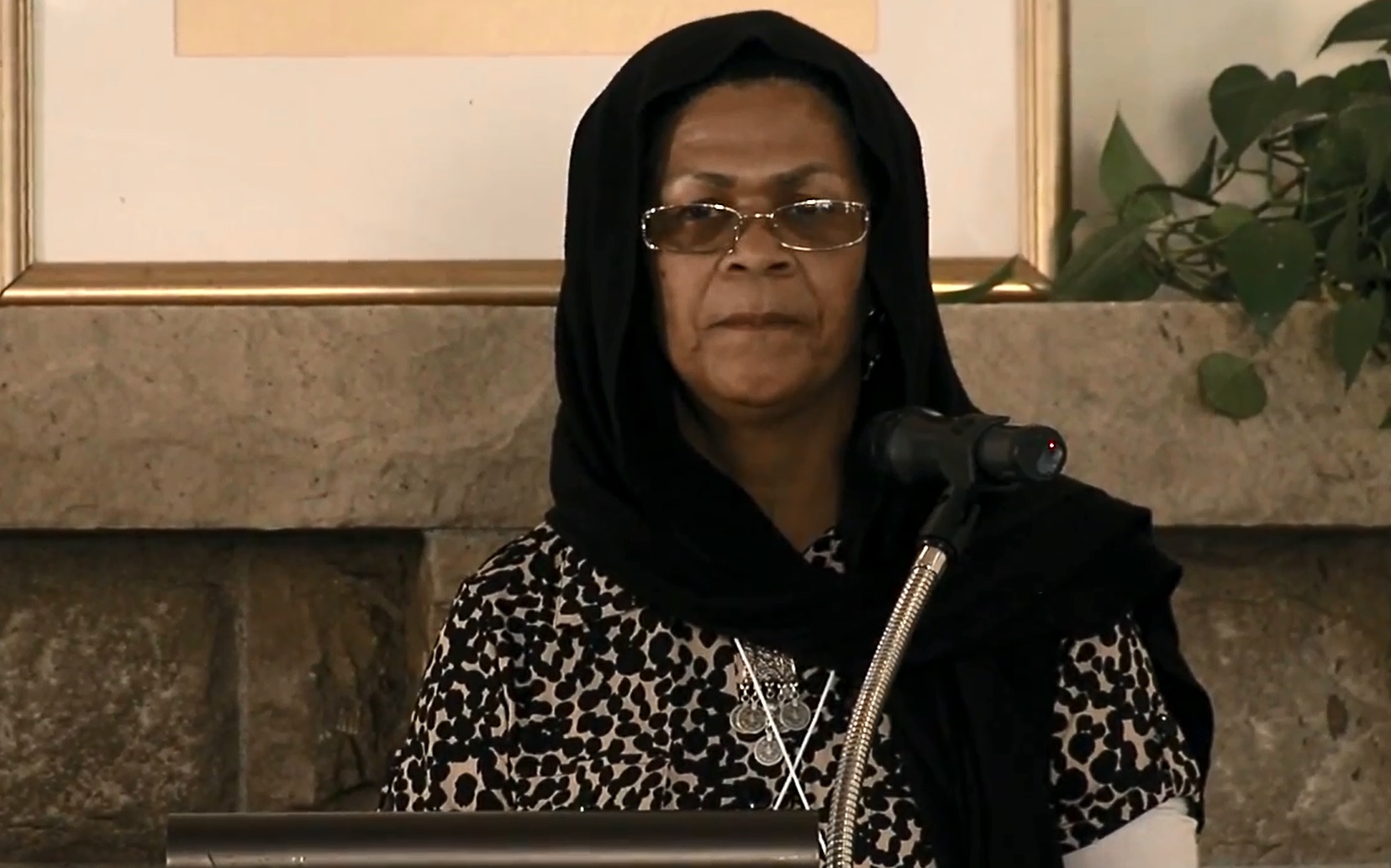
THE POLITICS OF FICTION: A talk by Elif Shafak

Elif Shafak is the most-read female author in Turkey, where she is as well known for her descriptions of backstreet Istanbul as she is for her global and multicultural perspective. Her writing is at once rooted in her politically feminist education and her deep respect for and knowledge of Sufism and Ottoman culture. In her most recent novel, The Forty Rules of Love, two powerful parallel narratives take the reader from contemporary Boston to thirteenth-century Konya, where the Sufi poet Rumi encountered his spiritual mentor, the whirling dervish known as Shams.

In this talk she emphasizes the need for us all to get beyond our limited “circle” of like-minded people. We at Baraka feel that the spiritual implications of her talk are profound.

...................................................................................

9 MINUTE TED TALK ON HOW TO READ THE QURAN

Lesley Hazleton explores the Koran and finds much that is quite different from what is reported in commonly cited accounts.

...................................................................................

THE NIGHT OF POWER & SURAH AL QADR, teleconference

On Monday, September 6th, Shaikh Kabir and Camille Helminski, with Mahmoud Mostafa, spoke for about 40 minutes with friends from the Baraka community.  The Night of Al Qadr was when the Prophet, may he be blessed, in utter receptive stillness received a message that would transform a large portion of humanity. Al Qadr is the singular power that offers to each soul a unique destiny and peace of heart. You can listen to a recording of that call.

...................................................................................

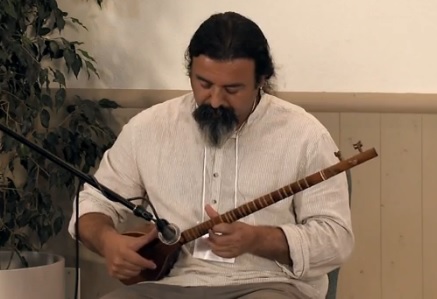
THE DRINK SENT DOWN by The Dost Quartet

Listen to track. Since the Baraka advisory board has been stressing the value of creativity and adapting traditional forms to the contemporary world, we’re offering an example of a contemporary adaptation of a traditional Turkish Ilahi. This track is from “The Garden within the Flames,” Interworld Music, Brattleboro, Vermont, 1997.

The CD can be ordered from Threshold Society.

...................................................................................

AN INTERVIEW WITH SHAYKH FADHLALLA HAERI

Kabir Helminski conversed with Shaykh Fadhlalla Haeri in Praetoria, South Africa about meeting the spiritual needs of our time, about reason and spiritual intelligence, about spiritual capacities and the power of unconditional love. Listen to this remarkable conversation.

...................................................................................

TALKS FROM “SPIRITUAL INTELLIGENCE & AWAKENING LOVE”

Amina Wadud, Jamal Rahman, Seemi Ghazi, Camille Helminski, Kabir Helminski, Ali Allawi, (missing from frame: Amean Hameed)

Baraka’s 2nd annual retreat offered inspiring and informative talks, spiritual practice, the sublime music of master neyzen, Eyman Gurten, as well as lots of friendship among people of all ages and backgrounds.

Ali Allawi

Recovering the Transcendent.  A talk given by Ali Allawi at the 2nd Baraka Retreat, “Spiritual Intelligence and the Awakening of Love,” La Casa de Maria, Santa Barbara, California, July 17th, 2010.

An Introduction to Spiritual Intelligence. A talk given by Kabir Helminski followed by comments from Baraka presenters.

How Spiritual Intelligence Operates A talk by Kabir Helminski from the Baraka Retreat.

Jamal Rahman

Beauty in the Qur’an with Insights from Mulla Nasrudin. A talk by Jamal Rahman.

Reflections on the Divine Names through Ibn Arabi. A talk by Seemi Ghazi.

Spiritual Intelligence in the Mirror of Rumi. A talk by Camille Helminski.

...................................................................................

TALKS FROM “FINDING OUR BALANCE,” 2009 BARAKA RETREAT

Cemalnur Sargut is one of Turkey’s deepest and most inspiring spiritual teachers. We were honored by her participation in “Finding Our Balance,” in October 2009. In this talk she shares her life experience, her love of her own teacher, Samiha Ayiverdi, her reflections on the nature of the spiritual journey, and her recommendations for how to live a spiritually balanced life. Listen to Cemalnur.

...................................................................................

BARAKA: RECONNECTING WITH OUR SPIRITUAL LEGACY

Kabir Helminski

Many spiritually inclined people, and especially those from a Muslim background, face a double alienation in today’s world.  On the one hand, they are alienated from the mad rush of contemporary society with its commercialization, its ugliness, its pandering to the ego, and its lack of meaning. On the other hand, they are equally alienated from various expressions of Islam that fail to inspire them. Too often, the teachings of Islam as they are presented seem irrelevant, authoritarian, dogmatic, and one-dimensional. Read More »

...................................................................................

RECOVERING THE TRANSCENDENT IN ISLAMIC SPIRITUALITY

Ali Allawi. Few people combine real life experience with spiritual insight as much as Ali Allawi.  He has a deep appreciation for the spiritual education once provided by the Sufi orders and the need for reviving an effective language of spirituality. We were delighted to learn that he is also closely associated with our dear friend, Shaykh Fadhlalla Haeri, and thus deeply acquainted with the path of spiritual experience. He has also held positions of responsibility as Minister of Trade and Minister of Defense in the cabinet appointed by the Interim Iraq Governing Council from September 2003 until 2004, and subsequently Minister of Finance in the Iraqi Transitional Government between 2005 and 2006.

The following is an excerpt from Ali Allawi’s The Crisis of Islamic Civilization (With permission from Yale University Press).

The recovery of the sacred, which is integral to any hope for the recovery of Islamic civilization, revolves around the notion of ihsan, the third essential dimension of Islam. In the sensibility of the times, this might veer towards tedious or sanctimonious moralizing, but ihsan has nothing to do with controlling or moulding outer forms of behaviour. It is a conscious pursuit on the part of the individual to perfect virtuous qualities which are associated with the inner spiritual journey. This pursuit was undertaken in the past through affiliation to the various Sufi tariqas, which had millions of adherents and adepts, or, in the Shia lands, through the more individualist and even solitary path of irfan, the metaphysical form of Sufism, which was acceptable to the Shia consciousness. The tariqas cannot be compared to the monastic orders of Christianity, if only because of their scale and ubiquity in Islamic public life. The modernist and Islamist assault on the spiritual paths of Islam destroyed a crucial form of organization which had encouraged the inculcation of moral qualities in the mass of the population as well as in the elites. It was not replaced with anything better than just an alternative: of either a dry ‘rationalist’ or scholastic Islam, or the doubts and moral ambiguities which are a feature of secular life. The ihsan aspect of Islam was degraded over time and, with it, nearly all the features of Islamic life that were marked by charitable works, communal solidarity and social concern. . . Although the traditional Sufi orders may be well past their prime as a vehicle for spiritualizing the masses, the deeper yearning which they had earlier addressed still remains.

Read More »

...................................................................................

RELIGION GONE GLOBAL, an interview with Reza Aslan

posted by Nathan Schneider

Reza Aslan stirs the pot and offers some valuable insights in this stimulating interview–no need to agree with every word of it. We need more voices like his. ~Kabir Helminski

Reza Aslan: “I take very seriously the Sufi notion that religion is an external shell that has to be shattered in order for the individual to be able to unite with the divine. The path that you take is irrelevant; the destination is what’s important. That affects not only my scholarship and my writing about religion, but my own spirituality as well. I think of myself as a person of faith; I believe that there is a reality beyond the material realm, and I want to commune with that reality. But what I’m talking about is so ineffable that I need a language of symbols and metaphors in order to make sense of it to myself and to communicate those ideas to other people. The difference between Judaism, Christianity, and Islam is the same as the difference between French, German, and Spanish. They’re different languages to describe identical sentiments. For me, the language, the symbols, and the metaphors that make the most sense are those provided by Islam: the notion of the oneness of God, the conception of divine unity. These make sense to me in a way that the symbol of the suffering servant on the cross does not, in a way that the symbol of the void in Hinduism does not, and in a way that the symbol of the wheel of rebirth in Buddhism does not. I value those other symbols and languages, and, indeed, I’m literate in them, just as I can communicate in French and Arabic. But I think in English. And I feel my spirituality in the language of Islam.” Read More »

...................................................................................

Next Page »« Previous Page

SIGN UP FOR NEWS

Turn your face with purity toward the primordial religion, according to the innate nature with which He has made humankind; do not allow what God has made to be corrupted. That is authentic religion, but most people do not understand

Qur'an 30:30-32


MAKE A DONATION

FIND US ON FACEBOOK